THE FCT Policy on Open Access to Scientific Publications Its aim is to ensure that the results of research funded by this institution are freely accessible. Based on principles of transparency and sharingthis policy It fosters collaboration between researchers and institutions, expanding the impact of Portuguese science on society and the economy..
This The policy came into effect on February 7th. and applies to scientific articles, books, book chapters and monographs, as well as doctoral theses and master's dissertations..
In order to support the scientific community in fulfilling this Policy, FCT has also created a support page with all the necessary guidelines for authors subject to the obligation. of open access publicationThe new website, available at acessoaberto.fct.ptIt provides a clear and practical interactive guide that helps identify the different ways available to ensure open access for each type of publication, providing detailed instructions on how to proceed in each case.
To better understand the scope of this measure, We gathered testimonies from various members of the national research community.From the north to the south of the country, they shared their perspectives on the opportunities and challenges associated with this requirement.
Democratizing knowledge and accelerating science.
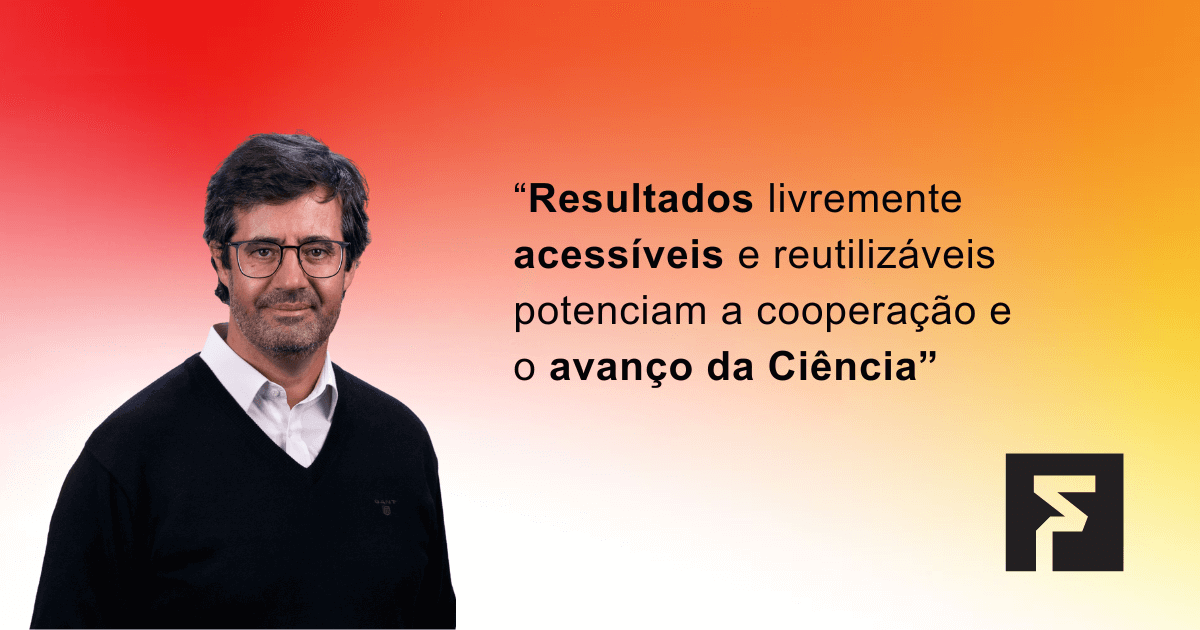
Luis Piardi, researcher at CEDRI – Polytechnic Institute of BragançaHe sees open access as a true catalyst for science. In his view, the policy "democratizes knowledge, eliminating financial barriers and allowing anyone, inside or outside academia, to access research results."
He further adds that, for him, the benefits are twofold: "open access accelerates the pace of scientific production and increases the visibility of research, while enhancing the transfer of knowledge to the business sector and optimizing public investment in research."
Flávia Pires, from CEDRI – Polytechnic Institute of BragançaShe notes that the mandatory nature of the policy increases the visibility of publications, not only among technical audiences but also the general public. "Consequently, it contributes to broadening the impact of scientific work, not only in terms of citations but also in its potential for application and replication in the real world," she explains. According to the researcher, the policy ensures transparency in the results obtained and guarantees that the knowledge produced returns to society.
To Carmen Santos, marine scientist and research assistant at the University of Algarve.An open access article receives far more views than a non-open access article, generally reflecting more citations. It also indicates that the main change is a greater democratization of access to scientific knowledge: "allowing researchers, students, and society in general to have free access to research results. This can foster international collaboration, interdisciplinarity, and the transfer of knowledge to non-academic sectors."
The researcher also emphasizes that "it increases the transparency of science and reinforces the social responsibility of the researcher, by ensuring that knowledge produced with public funding is accessible to all."
From Polytechnic Institute of Castelo Branco, Fernanda Delgado It also provides feedback, highlighting the transformative role of open access in strengthening transparency and scientific collaboration.
THE teacher and researcher It considers that the accessibility of publications “significantly increases the visibility and impact of the work, allowing researchers from different regions, especially from developing countries, to access and apply this knowledge.” It also emphasizes that the policy brings institutional benefits by strengthening the visibility of universities and research centers, and by promoting more standardized and reproducible practices in science.
In the view of Rita Salomé Varela Andrade Rodrigues Baleiro, coordinating professor at the University of Algarve.The policy on open access "can significantly increase the visibility and reach of research, allowing access to all interested parties." It also emphasizes that the sharing of knowledge contributes to the organization and preservation of scientific production in repositories, strengthening institutional prestige.
These testimonies reflect different realities, but converge on one essential point: the FCT's Open Access Policy is an opportunity to make science more visible, collaborative, and closer to society, provided it is accompanied by clarity, dialogue, and support for researchers. This is the first of several articles dedicated to sharing the perspectives of the scientific community.